



Custom Hanger Logo Size and Placement: A Practical Guide
 Uncategorized
A custom hanger logo may be small, but its size, position and color can significantly influence the appearance of a clothing display.
For fashion brands, boutiques and retail chains, branded hangers can help create a coordinated visual presentation. However, a logo that looks balanced on a digital design may appear too large, too small or poorly positioned when applied to the actual hanger.
Choosing the right logo configuration requires more than selecting an artwork file. Buyers should consider the hanger shape, available branding area, material, surface color and whether the hanger will be used as part of a matching set.
This guide explains the key factors to review before approving a custom hanger logo.
How do you choose the right logo size for a custom hanger? Measure the usable branding area on the actual hanger model, compare the artwork proportions and contrast, then approve the position and size on a physical sample. The millimeter sizes below are individual design examples, not a universal standard.
1. Why Logo Size Matters on Clothing Hangers
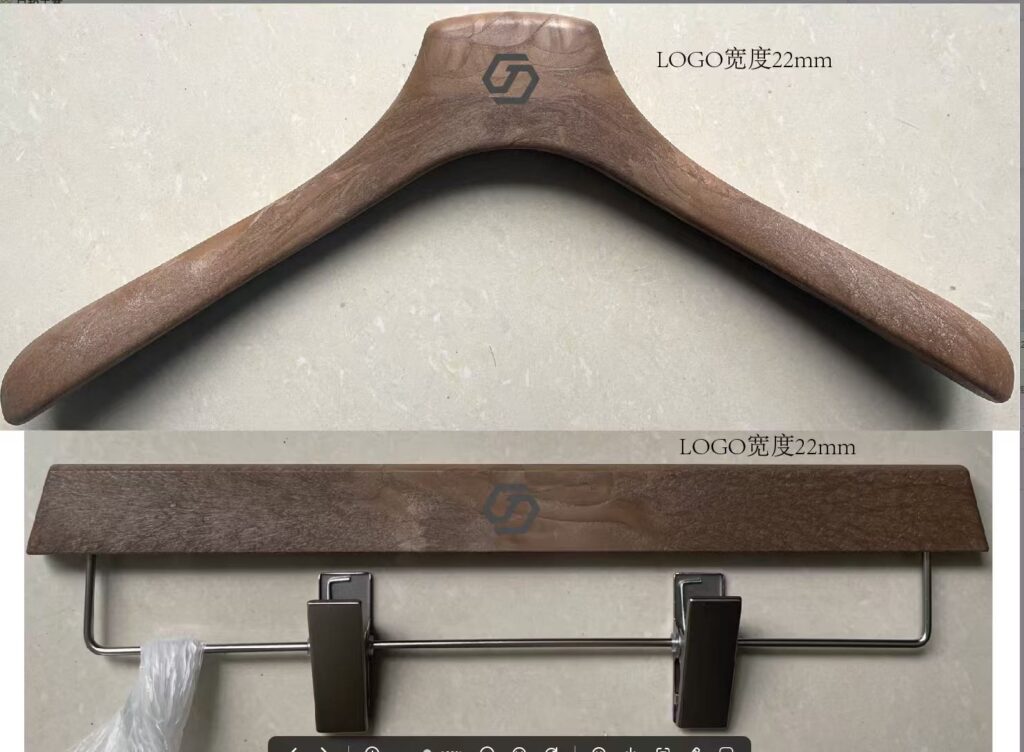
The central area of a hanger is often used for custom branding, but its dimensions vary between hanger designs.
Some hangers have a wide, relatively flat central section. Others have a narrower or more curved surface.
As a result, the same logo may look balanced on one model but oversized or difficult to read on another.
A larger logo is not automatically more effective. The objective is to create a clear, proportionate design that complements the hanger rather than overwhelming it.
Before choosing a logo size, buyers should review:
- The available branding width and height
- The shape and curvature of the central area
- The proportions of the artwork
- The spacing around the logo
- The expected viewing distance in the store
- The contrast between the logo and hanger surface
2. Practical Examples of Custom Hanger Logo Sizes
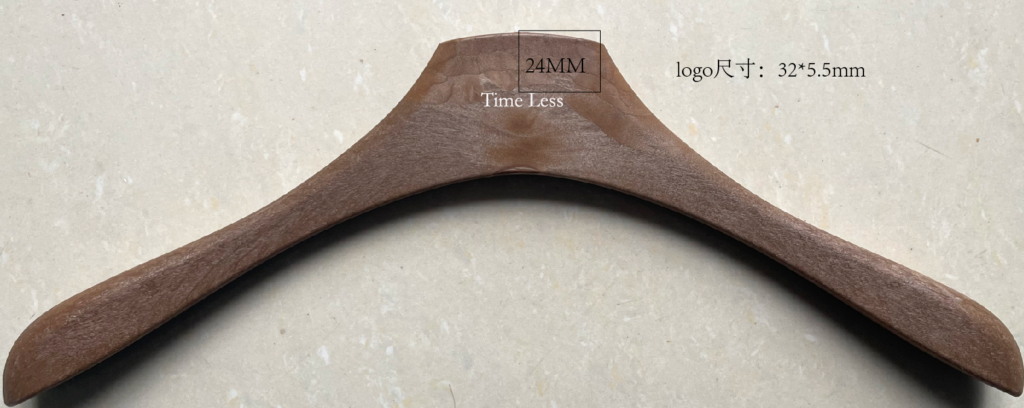
Custom hanger projects may require different logo dimensions depending on the design.
The following dimensions are examples from individual hanger customization references, not standard specifications for every model.
| Example | Logo Dimensions | Design Consideration |
|---|---|---|
| Graphic logo on a brown hanger | 22mm wide | Compact branding on the central section |
| Text logo on a wood-look hanger | 32 × 5.5mm | A relatively narrow text design |
| Logo on a dark hanger | 30mm wide | Proportion and visibility |
| Alternative dark-hanger design | 40mm wide | A wider branding layout |
| Logo on a smoke-grey transparent hanger | 55 × 9mm | White artwork and material contrast |
| Logo on a matching hanger and trouser bar | 55 × 8.8mm and 60 × 8.8mm | Coordinated branding across two components |
These examples illustrate why logo dimensions should be confirmed for each hanger configuration.
A 55mm-wide logo may work on one design but may not fit another model with a smaller central branding area.
Buyers should therefore avoid assuming that a logo size approved for one hanger can be transferred directly to a different model.
3. How Hanger Shape Affects Logo Placement
The shape of the hanger influences both the available branding space and the final visual balance.
Wide-Shoulder Hangers
Wide-shoulder hangers often have a more substantial central body.
Depending on the model, this may provide space for a text logo or graphic symbol. However, the curvature of the surface must still be considered.
Slim Hangers
Slim hanger designs may have a smaller central section.
For these models, a compact logo or simplified artwork may be more suitable than a large design containing multiple lines of text.
Trouser Hangers
Trouser hangers may use a horizontal bar as the branding area.
A logo positioned on a horizontal bar can require different dimensions from the logo used on the matching jacket hanger.
The two logos do not need to have identical measurements, but their visual proportions should work together.
4. Choosing Logo Colors for Different Hanger Surfaces
Logo visibility depends on the relationship between the artwork color and the hanger surface.
Dark Logos on Wood-Look Surfaces
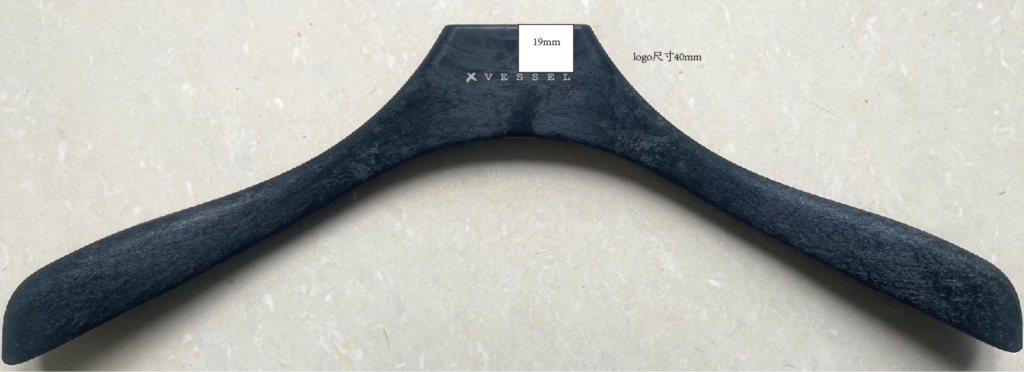
Dark artwork can create a relatively understated appearance on brown or wood-look hangers.
However, the surface pattern and shade may influence how clearly the logo appears.
A logo should be reviewed against the actual finish rather than a digital color representation alone.
White Logos on Smoke-Grey Acrylic
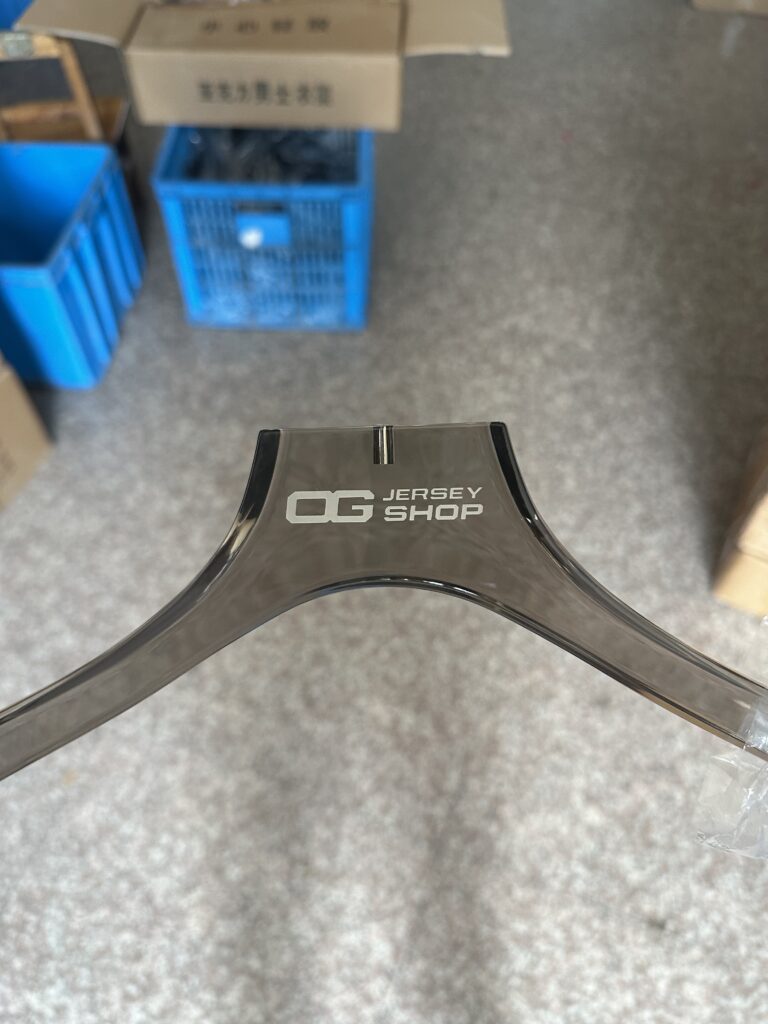
White artwork can create a stronger contrast on dark transparent acrylic.
The final appearance depends on the transparency, background lighting and viewing angle.
A logo that appears clear in a close-up photograph should also be checked in the intended display environment.
Logos on Dark-Colored Hangers
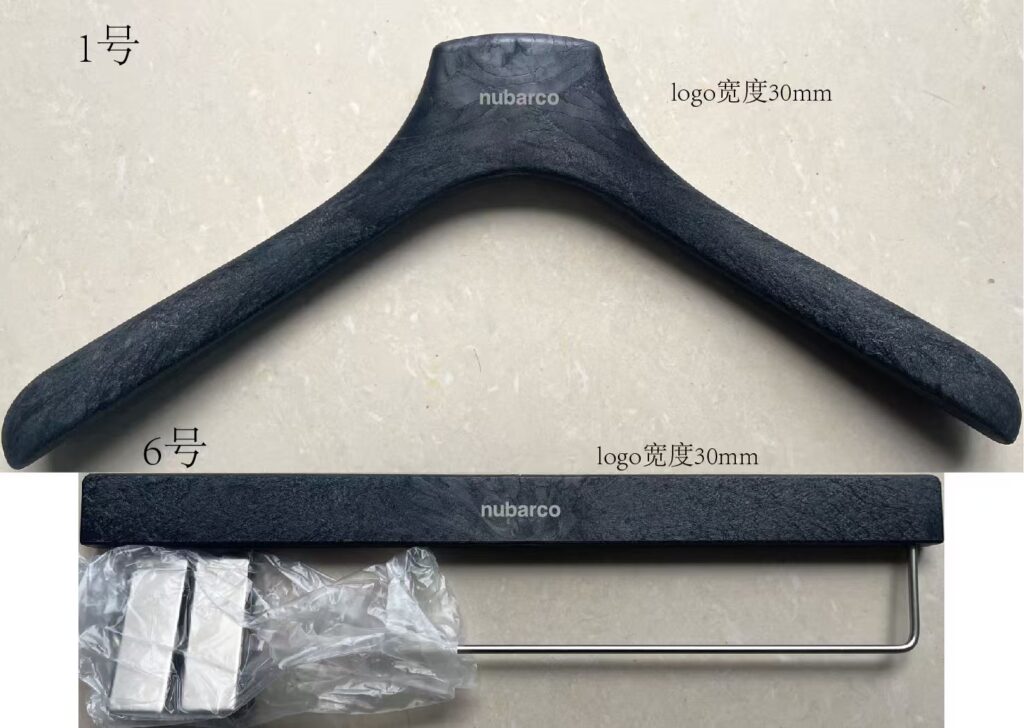
On darker hanger surfaces, the artwork color and size should be evaluated together.
A larger logo does not necessarily improve readability if the color contrast is insufficient.
5. Coordinating Logos on Matching Hanger Sets
Many clothing retailers use more than one hanger type within the same store.
For example, a coordinated collection may include:
- Jacket hangers
- Shirt hangers
- Trouser hangers
- Hangers with clips
- Other garment-specific designs
When these products are displayed together, consistent branding helps create a unified presentation.
However, different hanger structures may require different logo dimensions.
One customization example uses a 55 × 8.8mm logo on the main hanger and a 60 × 8.8mm logo on the matching trouser bar.
Although the dimensions differ, the objective is to maintain a coordinated appearance across both components.
Buyers should review the complete set together before approving the final artwork.
6. Why Physical Samples Are Important
Digital artwork is useful for checking general layout, proportions and alignment.
However, it cannot fully reproduce the appearance of a logo on a three-dimensional hanger.
A physical sample allows buyers to evaluate:
- Actual logo size and position
- Visibility against the finished surface
- Alignment with the hanger’s central section
- Appearance under different lighting conditions
- Visual consistency between matching hanger models
- Overall presentation with a garment attached
For repeat orders, approved sample photographs and written specifications can also help identify the correct logo version.
7. What Buyers Should Confirm Before Production
Before approving a custom hanger order, buyers should confirm the following details in writing.
Hanger model: Identify the exact hanger design and any matching components.
Artwork: Supply the approved logo file and confirm the correct version.
Dimensions: Record the logo width and height in millimeters.
Position: Specify the intended placement and alignment on each hanger model.
Color: Confirm the artwork color against the actual hanger finish.
Application method: Confirm the proposed logo application method for the selected model.
Sample approval: Review the final appearance using an approved physical sample or another agreed reference.
Repeat-order reference: Keep the approved specifications available for future production.
These steps help reduce ambiguity when communicating custom requirements.
8. Custom Logo Hangers for Fashion Retail
Custom logo hangers can support a consistent presentation across clothing collections and store locations.
The most suitable design is not necessarily the one with the largest or most prominent logo.
Instead, the final choice should balance hanger proportions, branding visibility, garment presentation and the overall retail environment.
At SANYU, we work with different hanger structures, finishes and customization requirements for clothing brands and retail buyers.
If you are developing a branded hanger collection, sharing your hanger reference, logo artwork and intended garment application is a practical starting point for reviewing the available customization options.
Frequently Asked Questions
What is the best logo size for a custom hanger?
There is no single best size. Measure the branding area on the chosen hanger, review artwork proportions and contrast, and approve a physical sample. The dimensions in this guide are project examples.
Can the same logo size be used on different hanger models?
Sometimes, but do not assume it will fit. Different central sections and surface curves can require separate dimensions and placement checks.
How should logos be coordinated on matching jacket and trouser hangers?
Review the two components together. Their logos can have different dimensions while keeping the same visual style and alignment.
Why should buyers approve a physical sample?
A sample shows the logo on the actual three-dimensional surface and lets buyers check size, position, visibility and the complete garment presentation.
Explore the SANYU product range, review custom hanger options, or send your artwork and model reference for an individual quotation.
Conclusion
Custom hanger logo design involves more than placing a brand name on a product.
Logo dimensions, placement, material contrast and coordination across different hanger types all influence the final result.
By reviewing these details before production, buyers can make more informed decisions and establish clearer specifications for their custom hanger projects.